There's a moment many of my clients describe — usually somewhere between their third sleepless night and their tenth unanswered email — when the exhaustion stops feeling like a scheduling problem and starts feeling like something deeper. Something existential.
Why does nothing feel like enough?
Why am I working this hard and still feel so empty?
What is wrong with me?
Nothing is wrong with you. But something important is asking to be heard.
When Your Nervous System Speaks, It's Not Small Talk
Stress. Overwhelm. Burnout. Anxiety. We treat these as inconveniences — things to manage, push through, or medicate into the background so we can get back to being productive. But in my 25 years as a trauma therapist and trauma counselor, I've come to understand them as something far more interesting than that.
They are signals. Urgent, embodied, impossible-to-ignore messages from a self that knows — on some level — that something is out of alignment.
Anxiety therapy isn't about silencing the alarm. Trauma therapy isn't about erasing the past. And healing from burnout isn't about figuring out how to fit more rest into an otherwise unchanged life. Real healing is about listening — and then reorganizing around what you hear.
The Body Keeps the Score, But So Does the Universe
Here's something I bring into my work that most therapists don't: cosmology.
Not as a metaphor. As a grounding reality.
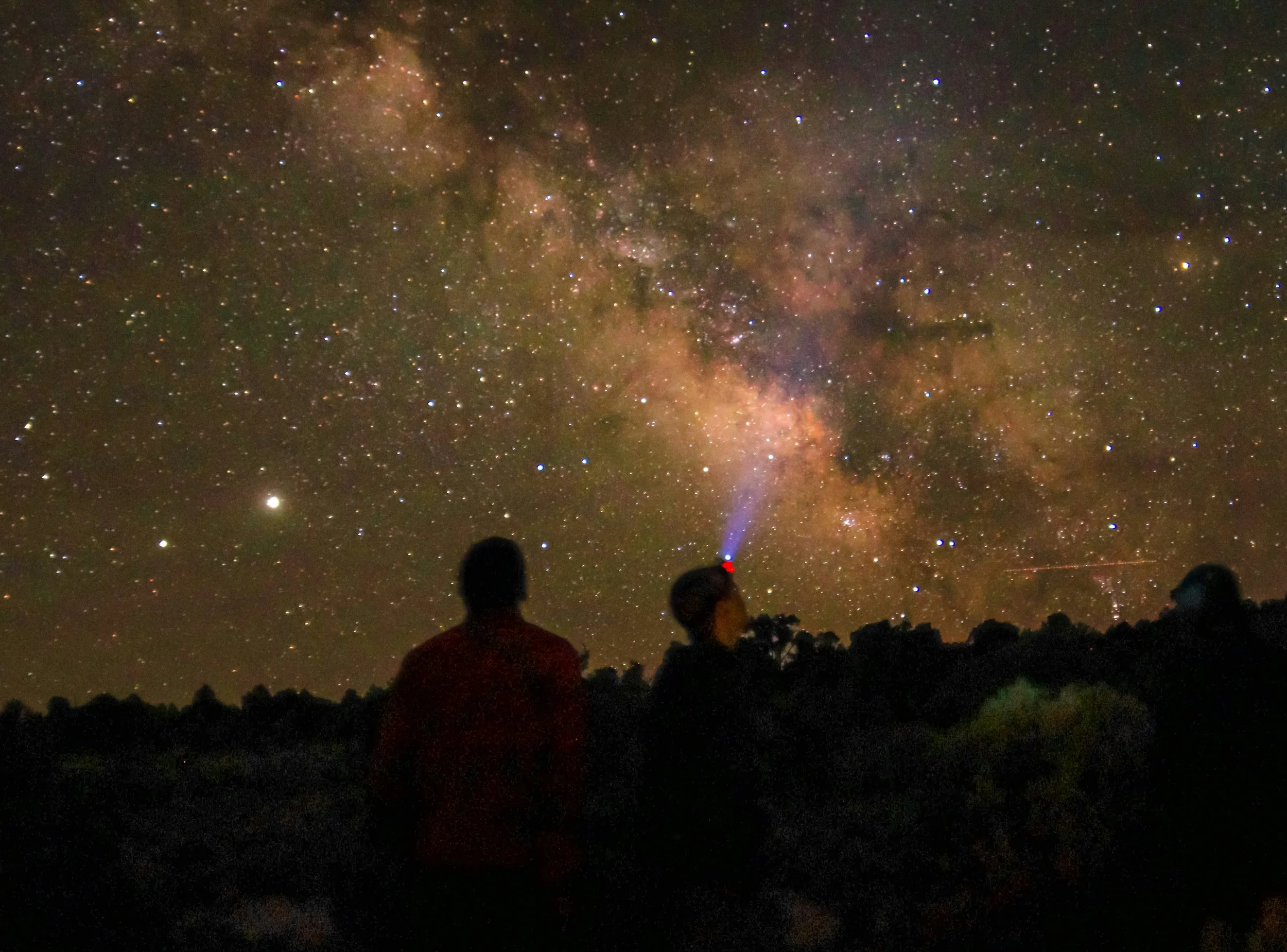
You are made of carbon forged in dying stars. The calcium in your bones was dispersed by supernovae billions of years before Earth existed. The water molecules in your body have cycled through ancient oceans, glaciers, and the breath of extinct creatures. You are not a person having a spiritual experience. You are the universe having a human one.
When I say this to clients in our first sessions, something often shifts — not because it solves anything, but because it reframes the stakes. You are not small. You are not separate. And your suffering is not a sign of personal failure.
It is a sign that something in you — ancient, intelligent, oriented toward wholeness — is calling out for realignment.
What Burnout Is Really About
Burnout doesn't happen because you worked too many hours. It happens when you've been pouring yourself into work — or relationships, or caregiving, or survival — that doesn't reflect who you actually are.
It's a meaning crisis wearing the costume of a scheduling problem.
The clients I work with in trauma counseling often arrive having spent years performing a version of themselves that the world approved of, at the expense of the one that actually needs to live. The exhaustion isn't from effort. It's from the distance between who they are and who they've been pretending to be.
Trauma therapy — particularly the somatic, embodied work I practice — helps close that distance. Not by talking about the gap, but by feeling your way back across it, breath by breath, sensation by sensation, story by story.
Anxiety Is Not Your Enemy
Anxiety therapy is one of the most misunderstood offerings in mental healthcare. People come in wanting it gone. They want the racing heart and the catastrophic thinking and the 3 a.m. spiraling to stop.
And yes — we work on that. Of course we do.
But anxiety, underneath the dysregulation, is often a highly sensitive nervous system doing exactly what it was designed to do: scan for threat, protect the self, sound the alarm when something doesn't feel safe. The problem isn't that you have anxiety. The problem is that somewhere along the way, everything started to feel like a threat — including being yourself.
Healing anxiety means rebuilding safety in the body. It means learning to distinguish between real danger and the echoes of old danger that your nervous system never got to fully process. It means, over time, being able to inhabit your own life without bracing for impact.
Meaning and Purpose Aren't Luxuries
One of the most persistent lies our culture tells us is that meaning and purpose are things you earn — after you've handled your responsibilities, after you've achieved enough, after you've rested (which never actually comes).
In my work, I've come to believe the opposite: meaning isn't something you find after healing. It's part of the healing itself.
When you understand yourself as a temporary and exquisite expression of a 13.8-billion-year-old universe, certain questions become urgent in a beautiful way. Not What do I need to accomplish? but What is mine to give? Not How do I become enough? but What does it mean to live fully, as exactly this person, in exactly this brief flash of time?
Those questions don't produce anxiety. They produce clarity. And clarity, in my experience, is what the nervous system was always trying to find.
What It Looks Like to Work Together
I work with people navigating trauma, anxiety, burnout, and the deep unrest that comes from living out of alignment with who they really are.
My approach is embodied, relational, and informed by a sense of the larger story we're all part of. I draw on somatic practice, depth psychology, and — yes — cosmology, because I've found that people heal faster and more fully when they feel themselves to be part of something vast rather than isolated in something small.
This isn't therapy as symptom management. This is therapy as becoming.
Ready to Begin?
If something in this post landed — if you felt recognized, or stirred, or quietly relieved — that feeling is information too.
You don't have to keep managing. You can actually become more you with ease, grace and freedom.
[Book a session with me →]Book your free discovery call
I work with a small number of clients at a time, and I'd be honored to be in conversation with you.
Rebecca-Sophia Strong is a licensed trauma and anxiety counselor, filmmaker, EMDR practitioner, and Boulder EMDR specialist offering anxiety therapy, trauma counseling, EMDR therapy, and IFS-informed EMDR intensives in Boulder, CO.
